
[ad_1]
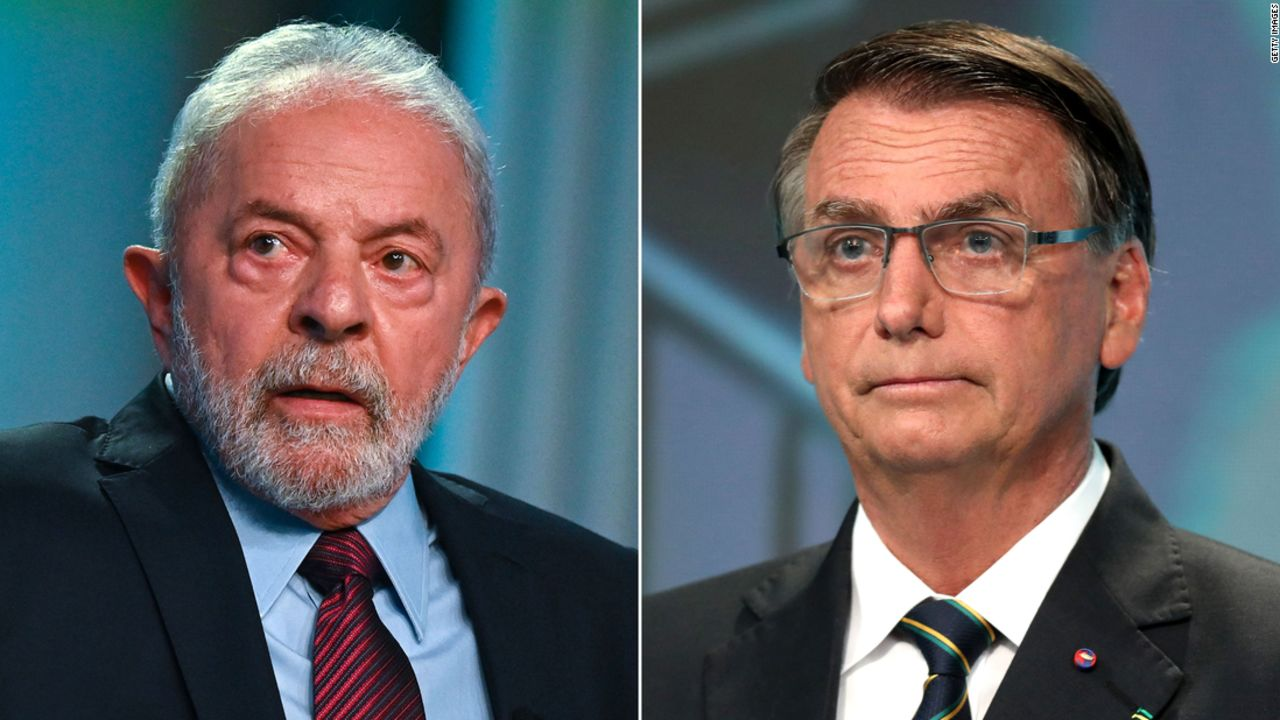
The presidential election in Brazil is in its second round. Former President Luiz Insio Lula da Silva was being projected for a straight victory in the first round, but he fell just 1.6 percent behind the 50 percent of the votes needed for him. It also meant that the 43.2 percent of the votes polled by the current President, Jair Bolsonaro, was much higher than expected. However, now the direct contest between the two is on 30 October.
The clash between the socialist Lula and the right-wing Bolsonaro is important for the rest of the world, not just Brazil’s own politics. Many people are also looking at it from the point of view of science and calling it a collision between a scientific approach and an unscientific point of view. The scientific community around the world considers Lula to be science-friendly. The importance of the world is here because a large part of the Amazon forests, called the lungs of the earth, is in Brazil and the policies of the person in power in Brazil are also important in deciding the future of Amazon and thus the world’s environmental protection. Will fulfill
In June this year, the Brazilian Academy of Sciences sent a report to every presidential candidate outlining the need to invest in science, education and sustainable development. Not surprisingly, only one candidate, Lula, sent his reply to the Academy. Not only this, a few weeks later Lula himself went to the academy in Rio de Janeiro and met the scientists.
One of the scientists involved in that meeting, Luiz Davidovich of the Federal University of Rio, said it was a sign of the hope scientists have for Lula. In the meeting, Lula’s team expressed their views and listened equally to the scientists.
When Lula was president from 2003 to 2010, his government invested heavily in science. At the same time, he had promoted social and environmental policies that stopped the deforestation of Amazon’s forests and brought millions out of poverty.
Currently, funding for science in Brazil is much lower than it was 15 years ago. Government funding for core science has declined by more than two-thirds. Government funding for university infrastructure has declined to such an extent that most federal universities are finding it difficult to pay even electricity and water bills. It has happened recently that many students are moving to other subjects in place of science and those doing research are also moving to other countries.
Ecologist Mercedes Bustamante of the University of Brasília told the journal Nature that there is no money to run the laboratory, buy equipment or maintain it.
In terms of science, environment and democracy, Bolsonaro’s image is the same as that of Donald Trump in America. That is why most people believe that the situation will change if Lula comes. When Lula was president, funding for science and technology had tripled. The funny thing is that Lula never got a chance to go to college herself but she knows very well the importance of higher education. He took the university system to every corner of Brazil in his time.
Even if Lula wins the October 30 election, it will take time to improve the situation as the country is in economic crisis, due to which about 3.5 crore people are suffering from starvation. Most blame Bolsonaro’s policies for this. So it will take time for Lula to increase the budget and set up a scientific framework. Helena Nader, the current head of the Brazilian Academy of Sciences and molecular biologist, says that we have to rebuild the entire system.
Bolsonaro has also gained a lot of notoriety for destroying the Amazon forests. At the same time, Lula is known among environmental lovers and scientists around the world for creating a system that reduced the deforestation of the Amazon by 80 percent between 2004 and 2012.
In contrast, Bolsonaro promoted mining and development near forests and loosened environmental laws. As a result, there was a lot of deforestation, attacks on environmental activists and people of native communities increased across the country. This deforestation also encouraged organized crime there.
The Amazon forests are so spread and dense that much of the work of monitoring their harvesting is done through satellites. After Lula comes to power, the work of space research in this direction will have to be accelerated again. The agencies monitoring the environment will also have to be strengthened again. Lula’s advisers are already eyeing a climate summit in Sharm el-Sheikh, Egypt, in November.
Lula’s victory will have deep implications for science as well as public health. Lula and Bolsonaro’s attitudes towards public health welfare are also opposite. Bolsonaro has made steady cuts in the public health welfare budget during his tenure. His attitude in dealing with the Kovid epidemic has been as unscientific as Trump’s. At the same time, Lula has promised to increase spending on integrated healthcare. Along with this, he has also talked about more funding for the health infrastructure and pharma industry.
Based on the election results, the math of these areas is clear, if Lula wins, funding will increase and if Lula loses, funding will be cut further.
Obviously, the contest for the Brazilian presidential election is far more important than the local politics there. The result will be available after the run-off voting on October 30. However, opinion polls up to two days ago say that Lula is expected to get 49 percent of the vote and Bolsonaro 44 percent. Interestingly, if the contest is close, the chances of Bolsonaro not accepting the outcome are similar to what Trump did after the US elections.
Much will also depend on the position of the parties in the Senate and the lower house. Bolsonaro’s party has not weakened there. That is, even if Lula wins, his path is going to be challenging in the near future. At stake is science as well as democracy.
(The author is a freelance journalist. Views are personal.)
[ad_2]